[Historians] have always … written in the mode of magical realism. In strictly formal and stylistic terms, a text of social history is very closely connected to those novels in which a girl flies, a mountain moves, the clocks run backwards, and where (this is our particular contribution) the dead walk among the living.
Carolyn Steedman, Dust, p. 150
This was a psalter in whose margins was delineated a world reversed with respect to the one to which our senses have accustomed us. As if at the border of a discourse that is by definition the discourse of truth, there proceeded, closely linked to it, through wondrous allusions in aenigmate, a discourse in falsehood on a topsy-turvy universe, in which dogs flee before the hare, and deer hunt the lion.
Umberto Eco, The Name of the Rose, p. 69
In an earlier post, I described Five Wounds as an ‘anti-historical novel’. It relates to early modern Venice, the subject of my historical research, in much the same way as the marginalia in an illuminated manuscript relate to the sacred text that they accompany: except that in this case the sacred text, which alone justifies the marginalia, is absent or has been rewritten in a profane form. Here, then, the marginalia are promoted to the centre of attention, where they blasphemously assume the outward form of Scripture (I mean that the text is typeset in imitation of the Bible).
In the quotation from Umberto Eco above, the topsy-turvy world in the margins is related to the central reality of Scripture through the lens of mockery. Mockery also has a central place in Five Wounds, but violence is an equally important organising principle. So the novel literally describes a violent world, in which mutilations and murders are commonplace, but that violence is not restricted to the events described in the plot. The novel’s mode of representation is also violent, in that it deliberately misrepresents historical sources: it forces them to say things that they did not intend.
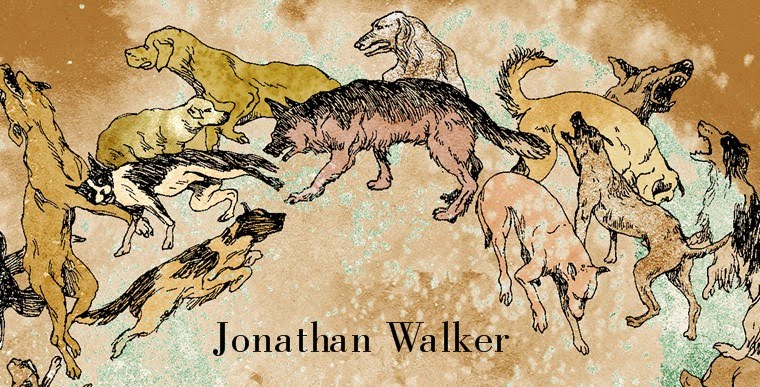
The action of Five Wounds is set in an unnamed city that is obviously a version of Venice, but is equally obviously not the historical Venice. Rather, it parodies selected aspects of that historical context, in a manner that sometimes draws upon the so-called ‘anti-myth’ of Venice, in which the Venetian state is portrayed as a corrupt, disguised tyranny rather than a virtuous, transparent republic (the anti-myth also underlies my first book Pistols! Treason! Murder!, which is a biography of a Venetian spy). In Five Wounds, there are also numerous garbled references to Venetian topography, including (notably) the Ghetto, which is here occupied by dogs, and is on the site of an abandoned foundry, this last taking up an etymological speculation about the origin of the word, ‘Ghetto’, and rendering it literally.
If Five Wounds is set in several different historical periods simultaneously, as I suggested in that earlier post, then perhaps we might ask, Which, and in what proportion?
Much of the setting seems to be, roughly, mid-nineteenth century: dagurerreotypes, gas lighting, top hats. But some people wear eighteenth-century-type clothing. And the city's constitution parodies that of the Venetian republic, which ceased to exist in 1797. With regard to the book’s conceptual universe, there are references to theoretical arguments put forward by a variety of early modern thinkers, for example Machiavelli and Paracelsus; to early modern theories about the physiological origins of anger and rabies; to Neoplatonic debates on the meaning of hieroglyphs (which are garbled interpretations, based on erroneous premises); and so on. Moreover, a large painting of Paradise in the ducal palace, based on one created by Tintoretto (or his son and workshop) in the late sixteenth century, is newly painted and installed in the novel.
Similarly, some of the more complex illustrations (the plates, which appear at the end of selected chapters) incorporate photographic elements and textures into images that otherwise resemble etchings: that is, they superimpose two quite different image-making technologies.
This game of historical mix-and-match bears some resemblance to what anthropologists and cultural theorists call ‘bricolage’, a sort of ‘do-it-yourself’ attitude to culture, in which a world is made out of borrowed odds and ends, which are put to use without much interest in their original or intended function. Bricolage replaces the idea of misinterpretation with that of appropriation. Misinterpretation presupposes an original meaning that retains priority over all subsequent readings. It excludes unbelievers and heretics. By contrast, appropriation permits anything. It knows no sin. Its only law is, 'Do what thou wilt'.
I remain committed to the idea of misinterpretation, if only because a world without sin - without laws - is profoundly boring.
We are told that it is possible to deconstruct any literary text: to force it to the point of self-contradiction. But Five Wounds positively invites you to do this. It it does not really make sense, and in particular it does not make sense when considered from a historical point-of-view, but it is not even internally consistent.
This superimposition of contradictory references is also apparent in the plot, which culminates with two alternative endings, a state of affairs that is foreshadowed throughout the book, especially in the illustrations. Thus the hand icon on the cover, which is inspired by an illustration from a seventeenth-century treatise on palmistry, presents to the viewer mutually exclusive readings: that the bearer will live long, and die young; that he will die by fire, and by drowning; and so on.
Above: the Five Wounds hand
This doubling to a character named Cuckoo, who is, in certain respects, the central figure in the book. He is a gambler with a face made of wax, which he manipulates freely. It is his fate that is at stake in the two different endings, and he is therefore represented as doubled in several images, i.e. as a copy of himself.
At the heart of this fictional world, then, there is a vacuum. Everything it requires to sustain stable meanings has been erased, or is ‘under erasure’ - simultaneously asserted and denied, like a phrase that is crossed out but still remains visible - a condition that is again alluded to in the person of Cuckoo, who is always represented in the illustrations with his face scratched out.
Above: Cuckoo the trickster
What is the point of all this? It is an attempt to explore the limits of historical explanation by violating all of its essential preconditions. It is also an exploration of the nature of interpretation. As such, Five Wounds opposes a book like The Da Vinci Code, which does not admit the possibility of error in interpretation. In The Da Vinci Code, this means this, and that means that; therefore this, with all the seductive inevitability of a false syllogism. In Five Wounds, mistakes are what drive the plot, or rather, the characters never know whether or not their interpretations are correct.
Even blasphemy admits of too much certainty. Self-contradiction is the only honest strategy.
Part of the violence of Five Wounds consists in its deliberate misrepresentation of historical source material.
I began writing it while researching for my doctoral thesis in the Venetian state archive. In the daytime, I faithfully transcribed documents. After dark, I wrote the opening chapters of Five Wounds under a bare light bulb in a rented room on the Lido, while listening to morbid folk songs on a cheap cassette recorder. Everything that had to be repressed in my interminable investigation of ‘Honour and the Culture of Male Venetian Nobles, c. 1500-1650’ bubbled to the surface in Five Wounds.
In the daytime, I tried to produce an original and profound but nonetheless humble contribution to knowledge, in which the relevant authorities were cited respectfully, and the sources itemised rigorously. It was assembled piecemeal and agonisingly slowly, as all theses are, with endless rearrangements, additions and revisions.
At night, I wrote straight through, without hesitating, and more or less without revision.
The results were vulgarly derivative, as all fairy tales should be.
Five Wounds was therefore conceived of as a deliberate insult to the notion of scholarly integrity in much the same way that a dream is an insult to the idea of conventional narrative structure. Its many historical references and quotations from abstruse treatises are systematically unreliable. Each is misleading or garbled in some way and the historical setting has been knowingly contaminated; not only by fantasy, but also by deliberate anachronism.
To put it another way, Five Wounds is set in several different historical periods simultaneously, none of which are represented accurately.
Five Wounds is not, therefore, a historical novel. Rather, it is an anti-historical novel. It is the book that my Ph.D. thesis was dreaming when it was asleep.
Consider Tony Richardson’s underrated film, The Charge of the Light Brigade, made in 1968 and set during the Crimean War in the mid-nineteenth-century. Richardson is immediately faced with the challenge of authenticity. Is telling a story set in the nineteenth century by means of modern media (that is, moving pictures intended for projection upon a cinema screen) an anachronism? Most complaints on the issue of anachronism concern questions of content or mentality—the latter usually involving the attribution of modern attitudes and beliefs to historical characters. The idea of formal anachronism is rarely raised.
The Charge of the Light Brigade is punctuated with animated sequences—made by Richard Williams—that are its most brilliant coup. These are very obviously not realistic at all, at one level. On the contrary, they consist of moving allegorical tableaux that dramatise relations between the European nation-states (the English lion and bulldog, the French cockerel, the Russian bear). However, their style is realistic in the sense that it invokes the satirical cartoons from the magazine Punch or the etchings that Phiz created for Dickens’ novels—and also perhaps their eighteenth-century forebears, William Hogarth and James Gillray. Considered as pastiche, the animations are lovingly detailed, and their tone faithfully reproduces the imperialist rhetoric of the mid-Victorian era. But they are not just pastiche. Something has been added to the original sources: most obviously, the simple fact of animation, but with it has come a different attitude, a kind of detachment and self-conscious manipulation of hindsight that is (by definition) absent from the primary sources. Very quickly, the integrity of the representation is (deliberately) undermined, as unified tableaux disintegrate into collaged fragments in a way that anticipates techniques later used by Terry Gilliam in Monty Python’s Flying Circus. Anachronism is deployed as a critical technique.
For Fredric Jameson, the unwillingness or incapacity to acknowledge anachronism is one of the fundamental characteristics of pastiche. To put this in positive rather than negative terms, one of the achievements of pastiche is to actively suppress the concept of anachronism. By contrast, deliberate use of anachronism, and especially of formal anachronism, is a central feature of The Charge of the Light Brigade, in which the tension—even the contradiction—between modern methods of storytelling and the very different narrative techniques used by people in the past is a creative tension. The only unforgivable error would be to pretend that this tension did not exist–as pastiche does. History exists to map the fault lines between the past and the present, rather than to paper over the cracks.
A man's work is nothing but the long journey to recover, through the detours of art, the two or three simple and great images which first gained access to his heart (Albert Camus)
Who knows why certain films stick in the memory? From my childhood, I have peculiarly vivid recollections of a handful, many of which are predictable, like The Wizard of Oz, because it was on every Christmas, or Star Wars, because it was a cultural phenomenon. In other cases, the memory is not of the film itself, but of some particular aspect of the experience of watching it, as is the case with Woody Allen’s Sleeper, for example, which is the only film I can remember my mother laughing at, when we watched it on television together late one night.
For me, one of these Proustian films is The Great Waldo Pepper, released in 1975, although I saw it a few years later, again on television. It was a pet project of its director, George Roy Hill, who was finally able to get it made because of the success of Butch Cassidy and the Sundance Kid and The Sting, and because one of the stars of those previous films, Robert Redford, was also committed to Waldo Pepper. It is sometimes described as a box-office flop, although Wikipedia says that it made $20,000,000 on a $5,000,000 budget, which doesn’t sound like a flop to me (having said that, the film is almost unknown now and difficult to obtain: my DVD is a German edition).
The Great Waldo Pepper tells the story of the titular character, played by Redford, who is trying to make a living as a pilot immediately after World War 1, when aeroplanes were still sufficiently novel that aerial circuses could draw crowds regularly. This way of life is coming to an end, however, as the film progresses (it starts in 1926 and ends in 1931). In fact, the plot is based upon familiar tropes of modernisation, in which bureaucracy, technological advancement and capitalism (in this case the establishment of a regulatory body that issues licenses for pilots and the growth of modern airlines) marginalise the individual and the pioneer spirit, a story structure that is instantly recognisable from the canon of Sam Peckinpah, although Hill’s milieu and characters are much more benign than Peckinpah’s.
This is all fairly predictable (although probably not to the pre-teen version of myself), but the film’s great strength is its commitment to reenactment. There are very few special effects shots or blue screen work used for the flying sequences. Rather, almost all of them involve pilots performing incredibly dangerous stunts in replica aircraft, whose accuracy to period standards was immediately apparent to me, since I was an enthusiastic assembler of miniature model aeroplanes.
Waldo arrived too late to participate directly in the air war in France, so he attempts to relive it vicariously by inserting himself into his retellings of historical incidents: in particular, a famous dogfight in which the German ace Ernst Kessler (probably inspired by Ernst Udet) shot down four out of five pursuing Allied airmen, before letting the fifth go unharmed when his final opponent's guns jammed. This too is a familiar trope: the heroic (because individualistic) ‘knights of the air’, whose chivalric treatment of their opponents contrasts sharply with the indiscriminate industrial death meted out below.
In Waldo’s retelling of the story, he of course takes the part of Madden, the only Allied survivor, and it is not until he crosses paths with someone who was actually in France that his charade is revealed. From Waldo’s point-of-view, the lie is justified because, 'It should've been me'. One might say that Waldo upholds Aristotle’s distinction between history and poetry: history is inferior because it is limited to what actually did happen, whereas poetry concerns itself with the loftier subject of what should or must have happened.
SPOILER ALERT IN WHAT FOLLOWS
There are two sequences in this film that stuck with me as a child, and then again later, when I rewatched the film on VHS as an undergraduate in the early 1990s. The first is when Waldo’s friend and colleague Ezra, attempts to perform a demanding stunt, the ‘outside loop’ in a monoplane of his own design, a plane and a stunt that were intended for Waldo, who is forced to watch from the ground due to his temporary suspension from flying after an accident in which a woman died. The outside loop involves tipping the plane into a vertical dive, and then levelling out halfway through the manoeuvre upside down, then climbing back up to the original starting position. It is much more difficult than a conventional ‘loop-the-loop’ (an ‘inside loop’), because the G-forces are much greater, as is the required engine power and the resulting stress on the plane’s wings. After several abortive attempts and near-misses, Ezra stalls out in the last phase of the manoeuvre, as he attempts to push the plane back up over the top, and plummets to the ground. Before Ezra has even hit, Waldo is off running to the crash site, but he is followed closely by the excited crowd.
Ezra is alive, but trapped in the wreckage. As gasoline spills, and Waldo tries to get him out, Ezra becomes hysterical. ‘Waldo, they’re smoking, they’re smoking!’, he shouts at the rubberneckers around the plane holding their cigarettes, and then, as the inevitable happens and the gasoline ignites, ‘Waldo! Don’t let me burn! .... I'm burning, Waldo!’ Waldo knows it’s too late. He can’t get Ezra out now, it’s impossible, there’s nothing he can do, so he picks up a piece of wood, and brings it down, hard. Then he pushes through the crowd and makes for a plane. Furious, he takes off and swoops down low, right over the heads of the crowd, who are now gathered around a funeral pyre. Waldo’s impetuous behaviour seals his fate. He has flown without a license, and moreover, in a deliberately reckless manner, so now he is banned permanently. In a bitter coda, we learn that Kessler, who is now working in America as a stunt pilot, has successfully performed an outside loop with another flying circus.
Ezra's death illustrates the role of empathy and catharsis in dramatic performance, or rather the idea that a certain kind of performance – the spectacle – does not permit true identification, but rather encourages voyeurism, a debased kind of pseudo-empathy. As we watch a war film – say, the opening of Saving Private Ryan – we are, according to this critique, little better than the spectators surrounding Ezra’s crashed plane. Our pleasure is derived from how closely these simulated deaths resemble actual deaths, but unlike the participants, who commit their whole bodies to the experience, and who risk injury and death in doing so, we do not really have anything at stake, existentially, and that is why our voyeurism is immoral. Ezra’s death in The Great Waldo Pepper is not a reenactment, but it does teach us that true empathy requires us to be involved directly. Among the spectators, only Waldo really feels Ezra’s predicament, and the consequence of that identification is that he must kill Ezra. 'Waldo! Don't let me burn!'
After this debacle, Waldo moves to Hollywood to join his friend Axel, who is working there as a stuntman. But temptation arrives in the form of a film about the famous dogfight with Kessler, Eagles Over France, perhaps inspired by Howard Hawks' infamous Hell's Angels, in which Kessler is flying his own stunts in a replica of his black and yellow Fokker Triplane. Axel, who still has a license, will play the part of McKinnon, the fourth Allied pilot to be shot down, whose plane caught fire, and who jumped without a parachute rather than burn to death (the parallel with Ezra is obvious and intentional). Waldo, under a pseudonym, and at Kessler's particular request, takes the role of Madden, the man whose story he had previously appropriated.
On the night before before the staging of the climactic dogfight, Waldo reviews the film’s props, protesting – like any good military reenactor – that they are inaccurate. The director, Werfel, replies loftily, 'Anybody can supply accuracy. Artists provide truth'. On the set, Waldo runs into Kessler, who confesses that his post-war career, so successful on the surface, is really only a series of distractions from a deep-rooted sense of failure. Kessler is heavily in debt (for gambling, we presume), and he drinks too much. He can barely remember the events of the famous dogfight, which was over in a few minutes, even though he lives his entire life now in the shadow of that brief moment of pure, immediate impulse.
This too is a trope: a sort of inverse version of trauma, in which a character can never return to the moment of his origin, to that which makes him who he is, or rather to the moment in which he was most himself (precisely because he was not aware of being so), and is therefore condemned to live out the rest of his life as a series of increasingly inauthentic attempts to recapture (to re-enact) that experience. Kessler’s disillusionment both complements and puts the lie to Waldo’s sense of temporal dislocation. Waldo arrived too late: he lives his life in the knowledge that his exemplary experience, the event that should have publicly confirmed his sense of himself, actually happened to someone else, before Waldo could get there to claim it. Kessler’s exemplary experience also happened to someone else: that is, to a version of himself that he no longer recognises, from whom he is alienated irrevocably ('Aren't you playing yourself?', Waldo asks him, but a handsome younger actor takes Kessler's place on the ground). In Waldo’s case, the original experience is doubly lost, because his participation in it is a fiction.
MORE SPOILERS
The second clip that stuck with me from The Great Waldo Pepper is excerpted in the video above, and it shows the climactic re-enactment of the dogfight between Kessler and Madden, the latter played by Waldo. This dogfight is, however, preceded by Axel’s big moment, in which he reenacts the crash dive of the doomed McKinnon, the pilot of the fourth plane that Kessler shot down.
Axel’s scene establishes clearly what is at stake in the more elaborate confrontation that follows. Axel has a parachute of course, but he is instructed by Werfel, the director, to wait until the plane is 'really on fire' before jumping, and not to pull the cord until the last possible moment, so as not to ruin the shot. 'Of course, you could not pull your chute at all, that way he'd be sure to get the right effect', Waldo comments sarcastically. Axel obeys Werfel's instructions, and, as a result, breaks his leg upon impact, but he is alive, and Werfel is delighted at the footage. Axel therefore reaps the monetary reward for his successful reenactment of McKinnon’s death. Everyone wins, but the message is clear, as Waldo's remark indeed suggests.
Battle reenactment is the exemplary form of reenactment because a battle is an exemplary event, which is why histories that are invested in the idea of the event tend to concentrate on wars. There is, however, one crucial difference between a battle and its reenactment: in the latter, the intention is to mimic the effects of the battle, that is, fatalities, as closely as possible, but without actually replicating them. If someone dies in a battle reenactment, then it has failed, but the measure of its success is in how close it can go up to the edge of killing the participants, without actually killing them. Authenticity is the primary value in reenactment, but in a battle reenactment, authenticity equals death. Reenactments of battles are therefore not entirely dissimilar from the aerial spectacle in which Ezra died, in which the attraction is similarly related to the risk of death. It is no surprise, then, that the confrontation between Waldo and Kessler is staged as a sort of gigantic game of chicken, in which the two dare each other to see who can go furthest.
This experience is only available to men (they're called 'dogfights' for a reason). Women are marginalised, and indeed trivialised, throughout The Great Waldo Pepper. Just prior to the clip above, Axel’s girlfriend asks stupidly, ‘What’d they do that for?’ when Kessler and Waldo throw their parachutes away before takeoff, and she later repeats, ‘I don’t understand. What are they doing?’ Kessler and Waldo, by contrast, have now reached a point of perfect understanding, where silent gestures are sufficient (see here for another discussion of silent masculine communication).
What Waldo and Kessler realise is that, to truly commit to their reenactment, they have to commit to its logic. They have to try to kill each other. Since the director has unfortunately failed to provide them with ammunition, the only way they can do this is to use their planes as weapons. Thus their reenactment departs significantly from the literal truth of the original events that give it meaning, but this is not important. What matters is their implacable understanding: their joint suspension of disbelief. If the audience is in fact composed of voyeurs, who cannot truly identify with the participants in a reenactment, then the audience is completely irrelevant to its success or failure. Waldo and Kessler therefore begin their game by turning their back on the audience, as they leave the camera plane far behind (although they are nonetheless being followed by another camera plane, the one directed by George Roy Hill).
In an actual battle, the participants are compelled to kill each other by the logic of their situation, but one of the distinguishing features of a reenactment is that the participants cannot be compelled to do anything. If they choose to risk death, as Waldo and Kessler do, then, precisely because they choose freely, their actions are more meaningful, existentially, than those of the participants in the original events. (This choice finds its exact equivalent, however, in the original battle, in which Kessler chose not to kill his helpless opponent.) Kessler can therefore relive the most intense moments of his life, but this time consciously, in the full knowledge of how meaningful they are; Waldo can finally prove that this is who he was meant to be. But this time, the ending is different. McKinnon (Axel) lives, whereas Kessler and Madden (Waldo) are going to die.
But while the film understands this, its staging of the dogfight is also tied up in the underlying paradox. The film can’t show the deaths of Waldo and Kessler, because Hill, like Werfel, does not actually want to kill his stunt pilots. Indeed, this climactic dogfight is the only sequence in the film that obviously incorporates blue-screen inserts for the close-ups. Even so, Hill takes considerable risks. That plane in the air really does have damaged undercarriage, and the stunt pilot is therefore really going to have to perform a controlled crash-landing to bring it down. As with Werfel and Axel, Hill has asked his pilots to go right up to the edge – not to pull their parachute until the last possible moment, metaphorically – but he can’t ask them to step over it.
Thus the film does not end with the deaths of Waldo and Kessler. Rather, it adopts what I call the ‘Butch Cassidy’ gambit (after Hill’s earlier success). It freeze frames just before the point of no return: just before Butch and Sundance are riddled with a fusillade of bullets, just before Kessler’s damaged wing finally disintegrates. The film is an arrow pointing towards that which it can never represent directly: death, or perhaps, the lived experience of that past encounter with death, whose singularity is irretrievable, because by definition what is singular can never be repeated. In dramatic terms, therefore, the real climactic moment is not death, but the recognition of solidarity in the face of death: the salute that Kessler gave to the helpless Madden pounding on his jammed guns, before peeling off into an unknown, and therefore free, future. In Kessler’s case, his fate leads him back inexorably to that same moment in the future, where Waldo is waiting for him.
Dramatically, therefore, death is not sublime. Instead, it is an anti-climax. As the music comes in on the soundtrack, as Waldo and Kessler separate, and Waldo is left completely alone, we cut to a board of photographs of famous aviators (the clip above ends just before this cut), which we have already seen at the beginning of the film. This time, however, we linger on Waldo’s portrait, where, if we are really paying attention, we can see the dates listed after his name: ‘Waldo Pepper, 1895-1931’. Parenthetically, I might note that I couldn’t be sure that I remembered this detail correctly when I rented the VHS tape in the early 1990s, so one of my goals in doing so was to pause it to confirm that Waldo had indeed ‘died’ in the dogfight with Kessler.
I don’t mean to imply that any of this was going through my head the first time that I watched The Great Waldo Pepper. I probably experienced the film in much the same way that Kessler experienced the dogfight on which his fame rests. But as I grow increasingly interested in the idea of reenactment, I try to explain the source of its fascination by looking back at the films and books that drew my attention as a child. Perhaps I too, like Kessler, am condemned to reenact an original (in the literal sense of the word) experience; but, like Waldo, my ontological priorities are reversed: the fiction comes first, and it is only the resulting reenactment that confirms the truth of the fiction, which in this case means rewatching the film repeatedly and trying to work out why its conclusion still moves me.
The following review of Hilary Mantel's Booker Prize-winning novel about Thomas Cromwell, Wolf Hall, is quoted from Abigail Nussbaum's excellent blog, Asking the Wrong Questions (although it begins with a passage that Abigail takes from another review by Dan Hartland). It is a long extract. I have set it in Arial to indicate the extent of the quoted text more precisely, and readers are encouraged to consult Abigail's original review here:
Those around Cromwell are characterised by an allegiance to a system: More’s Catholicism, Norfolk’s feudalism, Wolsey’s royalism. Cromwell, on the other hand, has an almost Nietzschean approach. “I distrust all systematizers, ” wrote the philosopher, “and I avoid them. The will to a system is a lack of integrity.” Mantel’s Cromwell likewise believes in personal respect and education, a fully humanist perspective which sets him at odds with the medievalised England to which he is born. Mantel sees his meritocratic rise – from smith’s son to soldier, trader to merchant, lawyer to Lord Chancellor – as a symbol of the birth of our modern age.
I would go even further and say that Mantel makes a virtue out of Cromwell's lack of integrity and sense of personal dignity as well (the latter is presumably linked to his humble origins, which leave him, unlike the nobles around him, indifferent to his family's honor). Several times over the course of the novel, Cromwell visits prisoners condemned for their words--the heretic John Frith, condemned by More; the self-proclaimed prophetess Elizabeth Barton, who had threatened Henry with divine retribution for casting off Catherine of Aragon and marrying Anne Boleyn; and finally, More himself. Each time, he counsels the prisoners to lie, recant, and compromise their principles in order to save themselves. "I would advise anyone to get a few more weeks of life, by any means they can," he tells Barton, advising her to 'plead her belly' in order to delay her execution, and the final conflict of the novel, between Cromwell and More, hinges on More's refusal to compromise his immortal soul by swearing an oath acknowledging Henry as the head of the church in England and the legality of his marriage to Anne. What in A Man for All Seasons was treated as the crowning glory of More's saintliness is, in Wolf Hall, described as the epitome of his arrogance and self-regard, with Cromwell, instead of the devil trying to tempt More away from righteousness, portrayed as a humanistic angel trying to save More from himself.
This description of Cromwell as an avatar of modernity, and moreover of a very particular - we might call it Nietzschean - idea of modernity, is reminiscent of my own characterisation of Gerolamo Vano in Pistols! Treason! Murder! as a man who stands not only for aggressive indifference to pious convention, but also for unlimited cynicism, maximum exploitation of a limited talent by ruthless opportunism, an almost ascetic indifference to the suffering of others, and a willingness to exploit the fear and credulity of his employers for his own gain (see here). I do not mean to imply that my book is the equal of Mantel's. Rather, I have 'prefigured' or 'emplotted' the past (or more accurately, the relationship between past and present) in similar ways to Mantel.
The will to a system is a lack of integrity: this criticism applies to historians as well as to the subjects of their enquiries.
The protagonists of The Revenger's Tragedy and The Massacre at Paris are obvious fictional models for their close contemporary, Gerolamo Vano. A more anachronistic prototype is the twentieth-century existentialist gangster, hero of films like Jules Dassin’s Rififi(1954), Jean-Paul Melville's The Red Circle(1970), and more recently Michael Mann’s Heat (1995).[1] These films depict a world in which women are deeply threatening to male moral autonomy, and relationships between men are the only real source of value and meaning. Moreover, that meaning resides in restraint and control, in what you refuse to say or reveal, but instead communicate indirectly through the subtext of a gesture or phrase. It is no accident that each of the three films I just mentioned has at its core a long, virtually silent sequence depicting highly concentrated, co-ordinated (and criminal) actions carried out by groups of men. Conspiracy is their version of intimacy.
According to Jerry Palmer, the thriller lionises
a personality that is isolated and competitive and who wins because he is better adapted to the world than anyone else. This superiority is incarnated in acts that are deliberately and explicitly deviant, and yet justified. The individuality, the personal worth of the hero is presented as inseparable from the performance of actions that in any other circumstances would be reprehensible.[2]
Palmer is writing from a Marxist perspective, perhaps with films like Don Siegel’s Dirty Harry (1971) in mind. The heist movies referred to above work differently. Although they too assume a conflict between individual and society, they, like Vano and game theorists, are deeply fatalistic. The individual always loses. The protagonist’s idiosyncratic morality is pointless and ultimately self-destructive, or even self-sacrificial.
There are very obvious ways in which Vano is not an ‘existential gangster’. He is certainly deadpan, but hardly reticent, and his reports entirely lack the focus and momentum of a modern thriller. It is not an accident that we know little of his inner life, and Vano's silence on such matters does not constitute a refusal - or rather a renunciation, and therefore a choice - in the way that the studied blankness of Alain Delon in The Red Circle does.
To use such an anachronistic frame of reference is therefore a calculated risk. It balances possibilities for greater insight against possibilities for misunderstanding. It both stimulates the imagination and offers false solutions. But, if used deliberately and self-consciously, it does not suppress difference. Rather, it invites comparison.
I LOST, ANYWAY.
[1] Robert Warshow, ‘The Gangster as Tragic Hero’, 1948, sets out some of the genre rules and assumptions. [2] Quoted in Tony Barley, Taking Sides: the fiction of John le Carré, 1986, p. 7.
The modern, secular notion of rationality assumes that decisions are taken by autonomous individuals on the basis of calculation of interest, and ‘interest’ is usually interpreted in reductive, materialist terms. A person’s goal will always be to maximise profit, while success is only possible at the expense of competitors. If you win, this means somebody else has to lose. This zero-sum version of rationality lies behind game theory. It describes a world based on the idea of free choices, but it is also deeply fatalistic. As a player, you make a choice to see the world in a certain way – that is, to accept a given set of rules – and this creates the conditions that lead to your downfall. It is the Prisoner’s Dilemma writ large.[1] Once you have divided the world into winners and losers, you know that eventually, no matter how many times you win, one day you are going to lose.
Is this how Gerolamo Vano thought? It is true that many people in seventeenth-century Venice did not make choices on this basis. Even when they tried to ‘maximise profit’, they did so in ways that did not fit the modern notion of rationality at all. For example, many Venetians prayed to the saints and used magic to achieve their goals. (It is worth pointing out here that any notion of rationality is based on specific assumptions about causation. For example, prayer is rational if you believe that God controls the universe and may intervene in it. Whether or not this prior belief is also rational is, of course, a separate question.)
My defence to the charge of anachronism on this point is that I am following Vano’s lead. It is Vano who eliminates religion. It is Vano who reduces people to isolated individuals, rendered vulnerable by their failure to understand the real, hidden motivations of others. It is Vano who suppresses any hint of a moral critique or a broader political theory.
[1] The ‘Prisoner’s Dilemma’ describes a situation typical in game theory, of which there are numerous variants. In its classic form, two prisoners involved in the same crime are awaiting trial. They are isolated and unable to communicate with each other. There is not enough evidence to convict either of them without a confession. If neither man co-operates, both will be released. If one man co-operates, then he will be pardoned in exchange for the conviction of the other. If both men co-operate, then both will be convicted, but they will receive reduced sentences. Hence the Prisoner’s Dilemma is: Should he co-operate? His calculation of the risks involved in not doing so depends on how much he trusts his associate.
All contents of this blog are copyrighted (apart from elements attributed to others). I DO NOT CONSENT TO USING THIS BLOG TO TRAIN AI. The companion website for this blog is jonathanwalkerwriter.uk.
I am the author of Push Process, a novella set in Venice and illustrated with my own photographs, published by Ortac Press in 2024. Also: The Angels of L19, a work of weird fiction set in an evangelical church in 1984 Liverpool, published by Weatherglass Books in 2021; and other books.
I am currently working on a novel with fantastic elements set in Glasgow in the early 1990s.
I'm on Bluesky and Instagram as @NewishPuritan. My website as a writer is jonathanwalkerwriter.uk; my website as an editor is jonwalkereditorial.co.uk.
Most of the photographs displayed on this blog are my own. A few, however, are by other, more famous photographers (always credited), and are displayed for discussion purposes only under fair use guidelines. If any copyright holders object to their use here, I would be happy to remove them on request.


 Posts
Posts

